
Have you ever wondered what really contributes to the alarming rate of vehicle collisions on our highways?
The statistics are staggering, with numerous factors at play. Understanding the various types of crashes and their underlying causes is crucial for enhancing safety measures.
As we explore the complexities surrounding vehicle crashes, it becomes evident that a combination of human error, environmental factors, and vehicle malfunction often leads to these incidents.
Key Takeaways
Table of Contents
- Understanding the primary causes of vehicle collisions is essential for prevention.
- Different types of crashes require specific safety measures.
- Human error, environmental factors, and vehicle issues are common contributors.
- Enhancing road safety involves a multi-faceted approach.
- Awareness and education are key to reducing the number of incidents.
Understanding the Scope of Road Safety
Understanding the scope of road safety is essential for reducing the number of accidents on our highways. Road safety encompasses a broad range of factors, including driver behavior, vehicle conditions, and environmental factors. By examining these elements, we can better comprehend the complexities of road safety and identify effective strategies for improvement.
The Impact of Road Accidents in the United States
Road accidents have a profound impact on the United States, resulting in significant loss of life and economic burden. According to statistics, thousands of people die in road accidents every year, with many more suffering injuries. The economic costs of these accidents are substantial, including medical expenses, lost productivity, and property damage.
The consequences of road accidents extend beyond the immediate victims, affecting families and communities as a whole. It is crucial to address the root causes of these accidents to mitigate their impact.
Why Accident Awareness Matters
Accident awareness is vital for preventing road accidents. By understanding the common causes of accidents, such as distracted driving and speeding, drivers can take steps to avoid these hazardous behaviors. Moreover, awareness campaigns can educate the public about the risks associated with certain driving practices, promoting a culture of safety on the roads.
Raising awareness about road safety can lead to a reduction in the number of accidents, making our roads safer for everyone.
Common Road Accident Types and Causes
Road accidents can be categorized into several common types, each with distinct causes and consequences. Understanding these categories is essential for both prevention and mitigation of accidents.
Rear-End Collisions
Rear-end collisions occur when one vehicle crashes into the back of another. These accidents are often caused by tailgating, or following too closely, and can be exacerbated by distracted driving.
Primary Causes and Prevention
The primary causes of rear-end collisions include distracted driving, speeding, and failure to maintain a safe following distance. To prevent such accidents, drivers should maintain a safe distance, avoid distractions, and be prepared to stop suddenly.
Head-On Crashes
Head-on crashes involve two vehicles colliding front-to-front. These accidents are particularly dangerous and often result in severe injuries or fatalities.
Risk Factors and Avoidance Strategies
Risk factors for head-on crashes include driving on the wrong side of the road, falling asleep at the wheel, and speeding. Avoidance strategies include staying alert, especially on two-lane roads, and using lane departure warning systems if available.
Side-Impact (T-Bone) Accidents
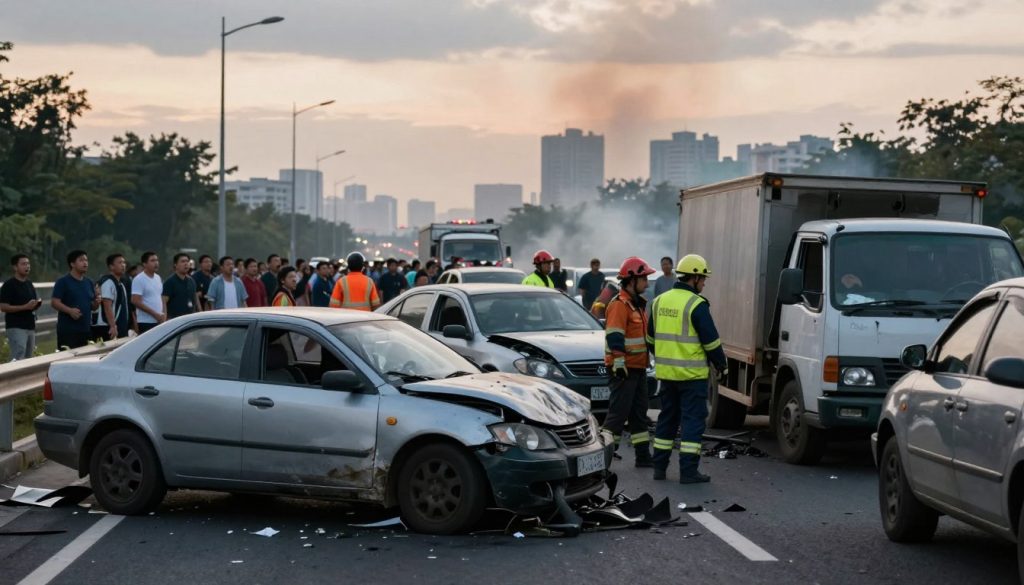
Side-impact accidents, also known as T-bone accidents, occur when the front of one vehicle collides with the side of another. These accidents frequently happen at intersections.
Intersection Safety Tips
To avoid T-bone accidents, drivers should approach intersections cautiously, obey traffic signals, and be aware of other vehicles and pedestrians. Using turn signals can also help prevent these accidents.
Rollover Accidents
Rollover accidents involve a vehicle flipping onto its side or roof. These accidents can be particularly dangerous and are often associated with loss of vehicle control.
Vehicle Types at Risk and Prevention
Vehicles with a higher center of gravity, such as SUVs and trucks, are more susceptible to rollover accidents. Prevention strategies include avoiding sharp turns and not overcorrecting when steering.
By understanding the common types of road accidents and their causes, drivers can take proactive steps to minimize their risk of being involved in such incidents.
Human Factors Behind Road Accidents
Understanding the human factors behind road accidents is crucial for developing effective strategies to reduce their occurrence. Human error is a significant contributor to road accidents, often resulting from factors such as distracted driving, speeding, and impaired driving.
Distracted Driving Behaviors
Distracted driving is a leading cause of accidents, involving activities that divert attention away from driving. This includes cell phone use, eating, and conversing with passengers.
Cell Phone Use and Other Distractions
Cell phone use is particularly hazardous, as it combines visual, manual, and cognitive distractions. Other distractions, such as adjusting the radio or GPS, also contribute to the risk.
Speeding and Aggressive Driving
Speeding and aggressive driving are significant contributors to vehicle incident categories, often resulting in severe accidents. Speeding reduces the time available to react to hazards, while aggressive driving increases the likelihood of losing control of the vehicle.
Speed-Related Accident Statistics
Statistics show that speeding was a contributing factor in 26% of all traffic fatalities in the United States in 2020. Aggressive driving behaviors, including tailgating and weaving in and out of lanes, further exacerbate the risk.
| Speed Limit (mph) | Average Stopping Distance (feet) | Risk of Fatality |
|---|---|---|
| 30 | 44 | Low |
| 60 | 134 | Moderate |
| 70 | 213 | High |
Impaired Driving
Impaired driving, due to alcohol, drugs, or fatigue, significantly increases the risk of accidents. It is a critical cause of accidents and falls under various vehicle incident categories.
Alcohol, Drugs, and Fatigue
Alcohol and drugs impair judgment, reaction time, and coordination, making it difficult to drive safely. Fatigue also plays a role, as it can lead to decreased alertness and slower reaction times.
Environmental and Vehicle-Related Accident Causes
Beyond human error, environmental and vehicle-related factors significantly contribute to the occurrence of road accidents. These factors can sometimes be more challenging to control than human behavior, but being aware of them can help in mitigating risks.
Weather Conditions and Road Hazards
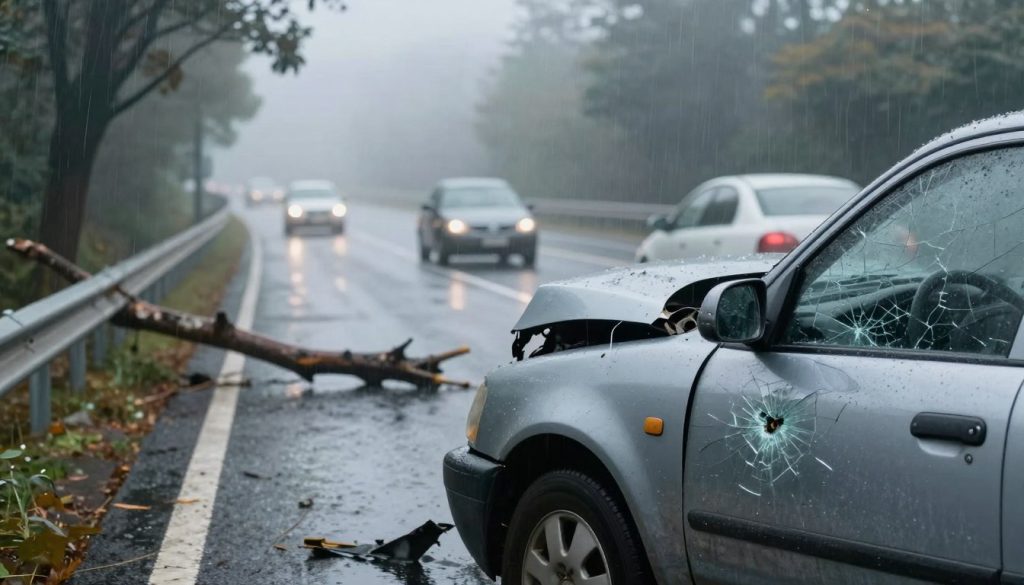
Weather conditions such as rain, snow, fog, and extreme temperatures can significantly impact road safety. For instance, wet or icy roads can reduce tire traction, while fog can limit visibility.
Driving Techniques for Different Weather Scenarios
Adjusting driving techniques according to the weather is crucial. For example, reducing speed and increasing following distance in rain or snow can help avoid accidents. Using low gear when driving downhill in snowy or icy conditions can prevent skidding.
Vehicle Maintenance Issues
Poor vehicle maintenance is another significant factor that can lead to road accidents. Issues such as faulty brakes, worn-out tires, and malfunctioning lights can compromise a vehicle’s safety on the road.
Critical Safety Checks to Perform Regularly
Regular checks can help identify potential issues before they become major problems. Key checks include tire pressure and tread depth, brake pad condition, and ensuring all lights are functioning properly.
By understanding and addressing these environmental and vehicle-related factors, drivers can significantly reduce their risk of being involved in a road accident. It’s about being proactive and taking steps to ensure both the driver and the vehicle are prepared for the road ahead.
How to Develop Defensive Driving Skills
Defensive driving is not just about following traffic rules; it’s about being proactive on the road. By adopting a defensive driving mindset, you can significantly reduce your risk of being involved in an accident. This involves a combination of skills and strategies that help you anticipate and respond to potential hazards.
Anticipating Other Drivers’ Actions
A key aspect of defensive driving is anticipating the actions of other drivers. This means being constantly aware of your surroundings, including the behavior of other vehicles, pedestrians, and road conditions. By anticipating potential hazards, you can take steps to avoid or mitigate them. For instance, if you notice a driver is tailgating, you can change lanes to allow them to pass, reducing the risk of a rear-end collision.
Maintaining Safe Following Distance
Maintaining a safe following distance is another critical component of defensive driving. The general rule of thumb is to leave at least a 2- to 4-second gap between you and the vehicle in front. This allows you sufficient time to react if the other driver suddenly stops or slows down. To measure this, choose a fixed point on the road ahead and count the seconds it takes for the vehicle in front to reach it after you do.
Using Safety Technology Effectively
Modern vehicles are equipped with a range of safety features designed to help prevent accidents. These include features like lane departure warning systems, blind-spot monitoring, and automatic emergency braking. Understanding how these systems work and using them effectively can significantly enhance your defensive driving skills.
Modern Vehicle Safety Features Explained
Some of the most advanced safety features in modern vehicles include adaptive cruise control, which adjusts your speed to maintain a safe distance from the vehicle ahead, and automatic emergency steering, which can steer your vehicle around a potential collision. Familiarizing yourself with these features and how to use them can make you a more effective defensive driver.
By combining these strategies—anticipating other drivers’ actions, maintaining a safe following distance, and using safety technology effectively—you can significantly reduce your risk of being involved in a road accident. Defensive driving is about being proactive and prepared for any situation that may arise on the road.
Creating Your Personal Road Safety Plan
Understanding road accident types and causes is crucial for developing effective strategies to prevent common traffic accidents. By being aware of the factors that contribute to these incidents, you can take proactive steps to enhance your safety on the road.
A personal road safety plan involves being mindful of your surroundings, anticipating potential hazards, and adopting defensive driving techniques. This includes maintaining a safe following distance, being cautious in adverse weather conditions, and avoiding distractions while driving.
By applying the knowledge gained from this article, you can significantly reduce your risk of being involved in a road accident. Stay vigilant, stay safe, and make a commitment to protect yourself and others on the road.