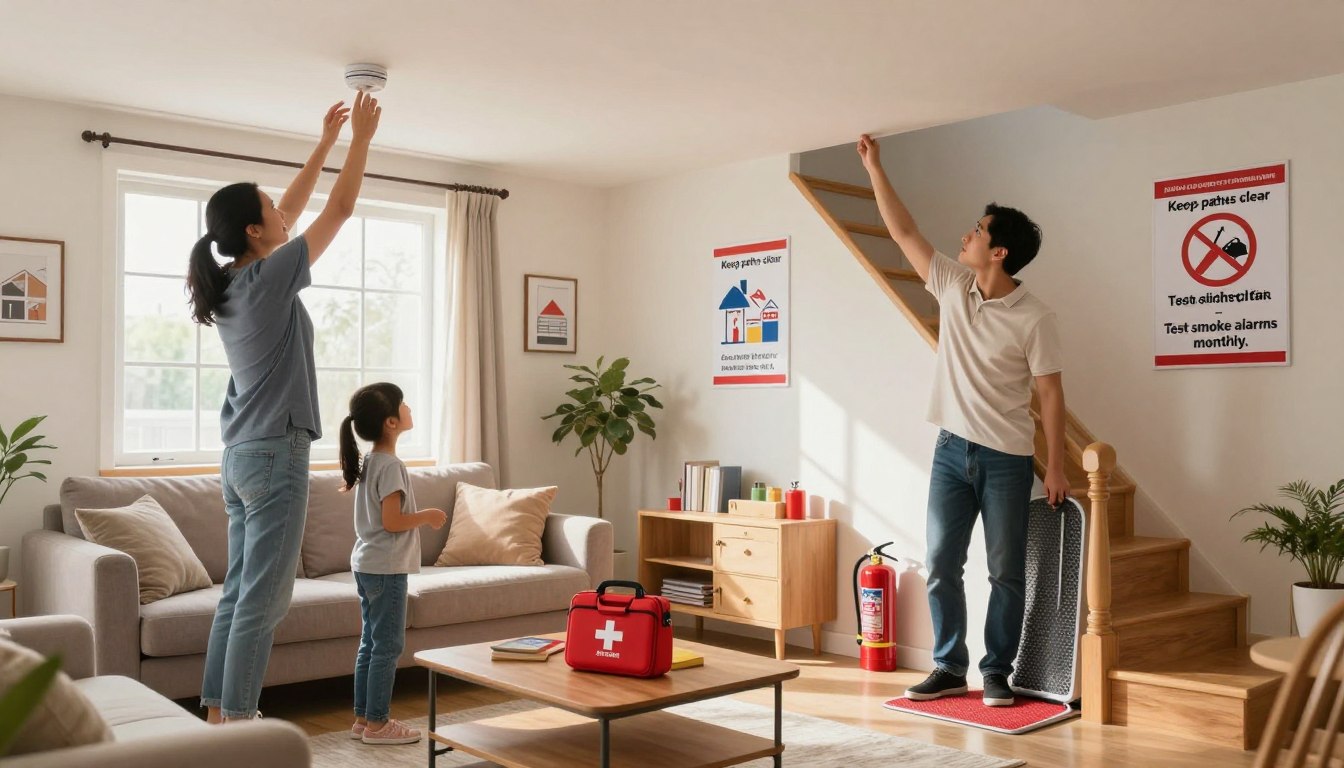
Are you aware of the hidden dangers lurking in your own home? Every year, countless individuals suffer injuries from preventable accidents that could have been avoided with the right knowledge and precautions.
Understanding the risks and taking proactive steps is crucial for home accident prevention. By identifying potential hazards and implementing effective safety measures, you can significantly reduce the risk of accidents and create a safer living environment for you and your loved ones.
Key Takeaways
Table of Contents
- Conduct regular safety audits to identify potential hazards.
- Implement effective safety measures, such as installing smoke detectors and securing heavy furniture.
- Stay informed about home safety tips to prevent common accidents.
- Educate all household members on emergency procedures.
- Review and update your safety plan regularly.
Understanding Home Accident Types and Prevention Fundamentals
The prevalence of home accidents is alarming, with various types of incidents occurring daily across American homes. Home accidents can range from minor incidents to life-threatening events, and understanding their types is crucial for prevention.
Alarming Statistics on Home Accidents in the United States
According to the National Safety Council, home accidents result in millions of injuries and thousands of fatalities annually. The statistics underscore the importance of home safety measures. Some of the most common home accidents include:
- Slips, trips, and falls
- Fire and burn injuries
- Poisoning
- Electrical accidents
Identifying High-Risk Groups: Children, Elderly, and Individuals with Disabilities
Certain groups are more vulnerable to home accidents, including children, the elderly, and individuals with disabilities. These groups require special attention and safety measures tailored to their needs. For instance, children need protection from poisoning and electrical outlets, while the elderly may require fall prevention strategies.
The Hidden Costs of Home Accidents: Financial, Physical, and Emotional
Home accidents have multifaceted costs, including financial expenses for medical care, physical pain, and emotional distress. The financial burden can be significant, with costs extending beyond immediate medical expenses to include lost productivity and long-term care. The emotional toll on families and individuals can also be profound.
Understanding these aspects is crucial for developing effective prevention strategies. By acknowledging the risks and taking proactive steps, individuals can significantly reduce the likelihood of home accidents.
How to Conduct a Room-by-Room Safety Assessment
To prevent home accidents, it’s essential to conduct a comprehensive safety check in every room of your house. This proactive approach helps identify and mitigate potential hazards, ensuring a safer living environment for everyone.

Kitchen Safety: Preventing Fires, Burns, and Cuts
The kitchen is one of the most hazardous areas in the home due to the presence of sharp objects, hot surfaces, and electrical appliances. Ensuring kitchen safety involves several key measures.
Essential Kitchen Safety Equipment
Fire extinguishers and smoke detectors are crucial for early detection and suppression of fires. Ensure these are installed and regularly tested.
Safe Cooking Practices
Adopting safe cooking practices, such as not leaving cooking unattended and keeping a safe distance from children, can significantly reduce the risk of accidents.
Bathroom Safety: Eliminating Slip Hazards and Electrical Risks
Bathrooms are prone to slip hazards due to water and moisture. Installing non-slip mats and grab bars can help prevent falls. Additionally, ensuring that electrical outlets are installed away from water sources reduces the risk of electrical shock.
“Falls in the bathroom are a significant risk, especially for the elderly and young children. Simple modifications can make a big difference.”
Living Areas: Addressing Trip Hazards and Furniture Safety
Living areas can be hazardous due to clutter, loose rugs, and unstable furniture. Securing furniture to walls and removing trip hazards can prevent accidents. Using cord organizers can also reduce tripping risks associated with electrical cords.
Basement, Garage, and Outdoor Spaces: Managing Tools and Chemicals
These areas often contain hazardous materials and tools. Proper storage of chemicals and power tools, along with ensuring good lighting, can mitigate risks. Regularly cleaning these areas and disposing of unnecessary items also contribute to a safer environment.
By following these guidelines and conducting regular safety assessments, homeowners can significantly reduce the risk of accidents and create a safer home environment.
Step-by-Step Guide to Preventing Common Home Accidents
Preventing home accidents requires a proactive approach to identifying and mitigating potential hazards. By understanding the risks and taking preventive measures, homeowners can significantly reduce the likelihood of accidents.
Fall Prevention: Installing Safeguards and Removing Hazards
Falls are among the most common home accidents, particularly among the elderly and young children. Preventing falls involves installing safeguards and removing hazards.
Stairway and Hallway Safety Measures
Ensuring stairways and hallways are safe is crucial. This includes installing handrails, securing loose rugs, and improving lighting.
Proper Lighting and Floor Surface Considerations
Adequate lighting and safe floor surfaces are vital. Using non-slip mats and ensuring floors are clear of clutter can prevent slips and trips.
Fire Safety: Detection, Prevention, and Escape Planning
Fire safety is a critical aspect of home accident prevention. It involves detection, prevention, and having a well-planned escape route.
“Fire safety is not just about having smoke detectors; it’s about creating a culture of safety in the home.”
Regularly checking smoke detectors, keeping flammable materials away from heat sources, and practicing escape drills are essential steps.
Poison Prevention: Secure Storage and Identification Systems
Poisoning is a significant risk, especially for children. Secure storage of toxic substances and having a poison identification system can save lives.
- Store chemicals and medications out of reach and in locked cabinets.
- Keep the Poison Help hotline number handy.
Preventing Physical Injuries: Safe Practices for Daily Activities
Daily activities can sometimes lead to injuries if not done properly. Adopting safe practices can mitigate these risks.
| Activity | Safe Practice |
|---|---|
| Lifting heavy objects | Bend at the knees, not the waist. |
| Cooking | Keep handles of pots and pans turned inward. |
| Using tools | Wear protective gear like gloves and goggles. |
By being mindful of how we perform daily tasks, we can reduce the risk of physical injuries.
Implementing a Family Home Safety Plan
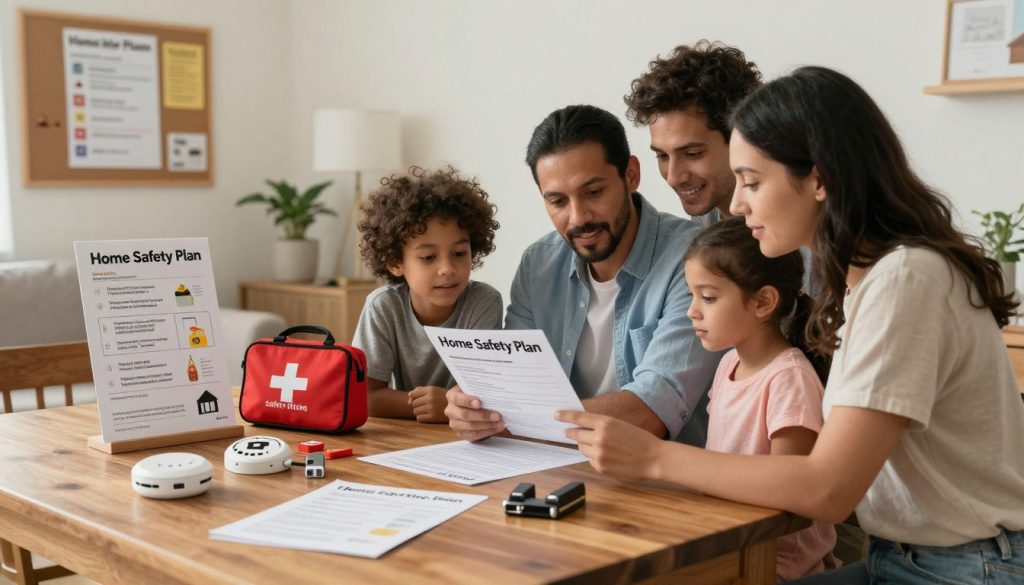
Home safety is a collective responsibility, and implementing a family home safety plan is the first step towards achieving a hazard-free home. A comprehensive plan not only helps in identifying potential risks but also prepares your family to respond effectively in case of an emergency.
Essential Safety Equipment Every Home Should Have
Having the right safety equipment is fundamental to any home safety plan. This includes devices that can detect hazards, mitigate risks, and provide immediate assistance when needed.
Smoke Detectors, Carbon Monoxide Alarms, and Fire Extinguishers
Smoke detectors and carbon monoxide alarms are critical for early detection of fires and dangerous gas leaks. Ensure these are installed on every level of your home and inside or near sleeping areas. A fire extinguisher, rated for the types of fires likely to occur in your home (e.g., kitchen fires), should be easily accessible.
First Aid Kits and Emergency Contact Systems
A well-stocked first aid kit is indispensable for treating minor injuries and stabilizing more serious conditions until professional help arrives. Additionally, having an emergency contact system in place, such as a list of important phone numbers and a meeting point outside the home, can be lifesaving.
Creating and Practicing Emergency Response Protocols
Knowing how to respond in an emergency is just as important as having the right equipment. Develop a clear plan that outlines what to do in various scenarios, such as fires, natural disasters, or medical emergencies. Practice this plan with all household members to ensure everyone knows their role.
Establishing a Regular Safety Maintenance Schedule
Regular maintenance is key to ensuring that safety equipment remains functional and that your home remains safe. Schedule regular checks of your safety devices, and maintain your home’s infrastructure, such as electrical systems and plumbing.
Teaching Safety Awareness to All Household Members
Educating everyone in the household about potential hazards and how to prevent them is crucial. This includes teaching children about safety practices and ensuring that all members understand the home safety plan.
By implementing these measures, you can significantly reduce the risk of home accidents and create a safer, more secure environment for your family.
Conclusion: Maintaining a Safety-First Home Environment
Creating a safe home environment is a continuous process that requires attention to detail and a proactive approach. By understanding home accident types and prevention strategies, you can significantly reduce the risk of common home accidents.
Implementing the tips and strategies outlined in this article can help you identify and mitigate potential hazards. Regular safety assessments and maintenance are crucial to preventing accidents and ensuring a safe living space for you and your loved ones.
By adopting a safety-first mindset and staying informed about home accident prevention strategies, you can protect your family and create a secure home environment. Stay vigilant, and make safety a priority in your daily life to prevent common home accidents.